Ever post a blog and nobody sees it? It feels like you worked hard for nothing. You followed the SEO rules, but the page stays empty. It hurts to be ignored. If you feel like chasing keywords has not been doing the trick, you are not alone. Search engines no longer work like before. They now reward comprehensive authority on a topic instead of single-page keyword games. That is where topic clusters for SEO come in.
By organizing your content into a “pillar page” and related subpages, you signal to Google that you are the expert on a subject. In this article, we will show you how to build a pillar-and-cluster content model, use an internal linking strategy for SEO and ultimately boost your organic growth.
What Are Topic Clusters for SEO?
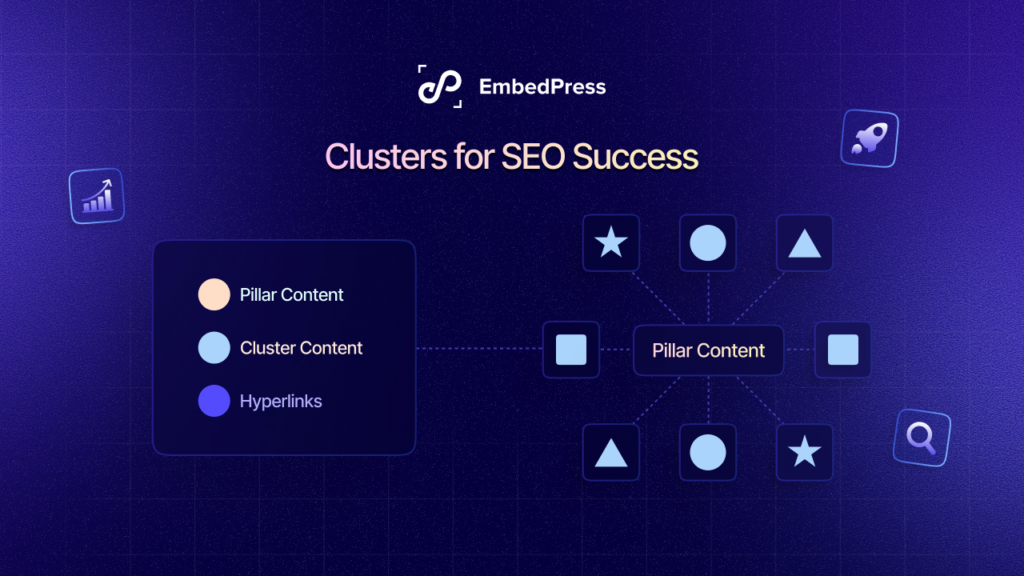
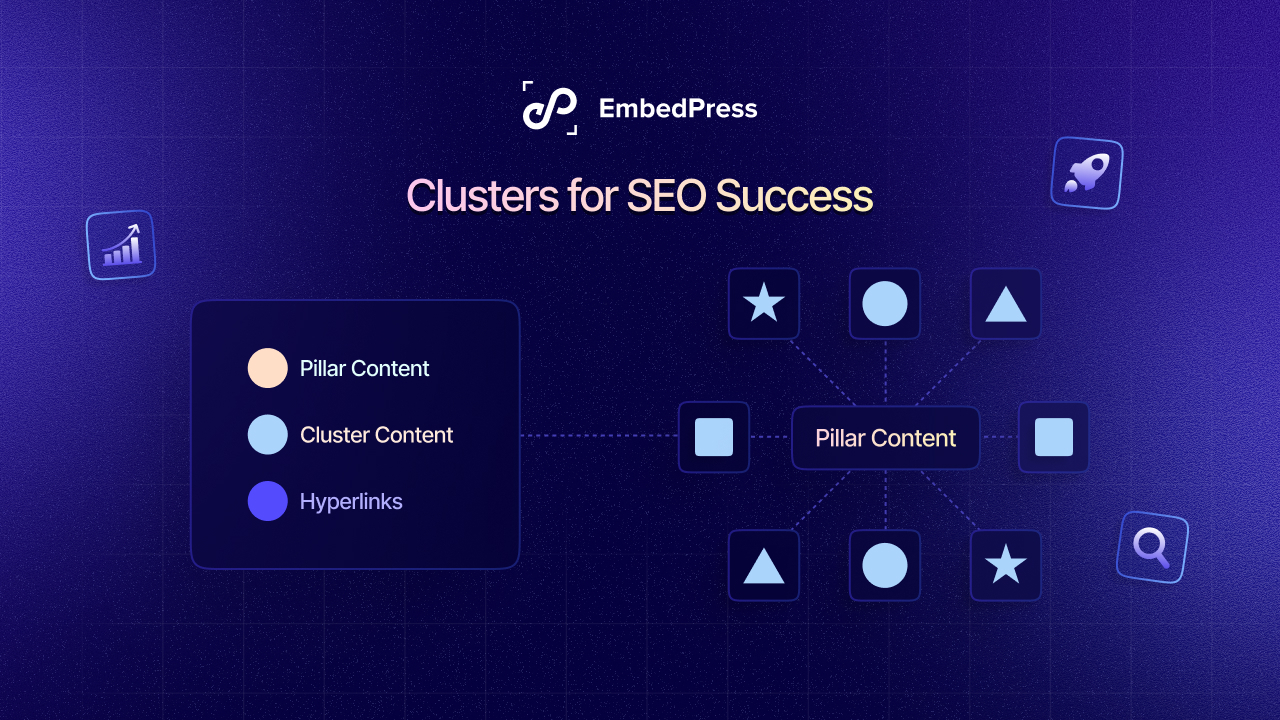
Topic clusters (sometimes called “content clusters”) are groups of interlinked pages all about one big subject. At the center is a pillar page that covers the broad topic in-depth (like a hub or main guide). Around it are “cluster” or “subtopic” pages that go deeper into smaller pieces of that topic. For example, a pillar page on social media marketing might link to cluster pages on Instagram tips, Facebook ads and TikTok trends. All pages link to each other in a neat web.
This structure is like building a mini Wikipedia for your topic. You are weaving a web of content that is both user-friendly and SEO-friendly. Each cluster page answers a specific question and the pillar page gives the overview. Together, they cover every angle, showing Google that your site has depth on the subject.
Imagine an online hub page like this “Content Marketing” guide. It serves as the main pillar page of a topic cluster, linking out to detailed subtopic articles. Each supporting cluster page links back, creating a web of knowledge. This pillar pages and topic clusters structure (sometimes called a “hub and spoke” model) shows Google you are an expert on the subject.
Why Topic Clusters Matter for SEO And Organic Growth
So, why go through all this effort? The answer is: better SEO results and stronger organic growth. Search engines today favor content hubs over isolated keyword pages. Here are some key benefits.
Enhanced Topical Authority
When you thoroughly cover a subject across many pages, Google sees you as a trusted expert. A well-structured cluster strengthens your digital presence and helps build topical authority. In other words, you earn topical authority SEO because you have clearly answered user questions on that subject.
Improved User Experience
Topic clusters organize information logically. Visitors can easily navigate from an overview to detailed subtopics (and back). This creates a semantic ecosystem – interconnected pages built around a central idea. Instead of hunting for answers on different sites, users stay longer on yours. Longer visits and lower bounce rates send positive signals to Google. In short, you are providing a smoother user journey that Google loves.
Smarter Search Visibility
By linking related content together, you make it easier for search engines to crawl and index your site’s depth. Search engines reward this clarity. In practice, a strong cluster can rank for hundreds of related terms at once (one case study saw a single cluster rank for 1,100+ keywords).
Alignment with Search Intent
Modern search algorithms (and even AI-driven search) look for comprehensive coverage. If your content anticipates and answers a range of related questions, Google will treat your site as the go-to resource. Clusters match how people search today: a central question plus many follow-ups. This means better SERP rankings and more organic traffic over time.
In short, topic clusters knit together your SEO content strategy into a more powerful whole. They help you focus on user intent instead of individual keywords. This focus on topical authority SEO and user experience ultimately drives steady organic growth – and keeps you ahead of the competition.
Building Pillar Pages And Cluster Content Strategy
Okay, you are convinced. How do you create these clusters? It starts with choosing and building your pillar page.
Choose a Broad Pillar Topic
Start with a core topic that is central to your audience. It should be broad enough to have many subtopics. For instance, if you run a travel blog, “Disney World Planning Guide” could be a pillar. If you are a home improvement site, “Ultimate Kitchen Remodel Guide” might work. The pillar page needs to cover this topic comprehensively, like a one-stop overview.
Research Keywords and Subtopics
Use SEO tools (Semrush, Ahrefs, Google Trends, etc.) to find related queries and long-tail keywords. What sub-questions are people asking about your main topic? These will become your cluster ideas. Keep a list of these subtopics – each will be its own cluster page. For example, under “Disney World Planning,” subtopics might be “budgeting tips,” “best hotels,” or “first-time visitor checklist.”
Write the Pillar Page
Create a high-quality, in-depth guide on the pillar topic. Use the main focus keyword (for example, “Disney World planning”) in the title, headings and early text. But do not overinject. Think reader-first: make it comprehensive and useful. Include a table of contents or clear sections so visitors (and Google) see the scope at a glance. Near the top, you can link out to each cluster page (you might not have written them yet, but leave placeholders or draft links).
Develop Cluster Pages
Now write the supporting cluster posts. Each one dives deep into one subtopic or question. For example, “Disney World Budgeting Tips” could be a cluster post linked from the main pillar. In each cluster article, naturally link back to the pillar page and other relevant clusters. Use the specific subtopic keyword for each page (like “best Disney World hotels 2026”). This reinforces relevance.
Optimize for Pillar Page SEO
Make sure your pillar page is optimized like any important page. Use clean URLs, meta tags and headings. The pillar page should target the broad, highly searched term. Incorporate one of our secondary keywords too – for example, you might include “pillar page SEO” in a heading or paragraph to emphasize best practices.
Use a Cluster Content Strategy
Organize your content calendar around clusters. Instead of random posts, plan which clusters to create next. For each cluster, ensure it answers a user’s question fully and links it back to the pillar. Think of it as setting up a content “neighborhood”: the pillar is the town center and each article is a street leading into it. The point is to always serve users multiple related resources on your site, rather than a single stand-alone post.
Steps to create your first topic cluster (in a nutshell):
- Identify the broad topic (for your pillar page) and its focus keyword.
- List subtopics or questions (cluster content ideas) using keyword research.
- Write the pillar page, covering the main topic and linking to the planned clusters.
- Create each cluster page, focusing on one subtopic, and link back to the pillar.
- Interlink clusters to each other when relevant (see next section).
- Publish and monitor. Over time, add more clusters or update content as needed.
This way, your cluster content strategy becomes the backbone of your SEO content plan. By clearly mapping out pillar and cluster content, you are building an SEO content strategy that search engines and users will find logical and useful.
Key Tips for a Successful Cluster Content Strategy
To wrap up, here are some practical do’s and don’ts:
- Do: Start with user intent. Think about your audience’s big question and all the follow-ups. Build content to meet every step of their journey.
- Do: Keep paragraphs short and language simple. (Even if the topic is technical, write so a 7th grader can get it.) Use headings and bullets to break up information.
- Do: Use a mix of sentence lengths. Short sentences give punch; longer ones allow detail. Vary them for a more “human” tone.
- Do: Write conversationally, as if explaining to a friend. Ask effective questions or add small asides. It keeps readers engaged.
- Do: Add visuals if possible (charts, screenshots, etc.) to illustrate complicated steps or data. They help break up the text and boost understanding.
- Don’t: Avoid stuffing keywords. It should feel natural. For example, we have put “topic clusters for SEO”, “pillar pages and topic clusters”, and “internal linking strategy for SEO” into this article where they make sense, not forcefully.
- Don’t: Do not forget to link! An otherwise great cluster page with no links to or from the pillar is like an island.
- Don’t: Do not let things go stale. Check your clusters every 6-12 months. Add new stats, replace broken links, and ensure the page still answers the question well.
- Don’t: Do not give up too early. Clusters can take months to show big ranking improvements. Be patient and keep building quality content.
By following these guidelines and keeping all the pieces connected, you will have a rock-solid SEO content strategy.
Embrace Topic Clusters for Long-Term Growth
Traditional SEO tactics (like random keyword-stuffed posts) are no longer enough. Topic clusters for SEO represent a smart, future-proof way to organize your content. They align with how Google and people search today: holistically and contextually. By creating pillar pages and related cluster content, by using a strong internal linking strategy for SEO and by continuously optimizing for quality and relevance, you are building a self-reinforcing system.
This strategy will not just give you a short-term traffic bump – it lays the foundation for sustained organic growth. You become the go-to authority in your niche and search engines notice. Remember, every time you add a well-linked cluster page, you are effectively expanding your reach. Over time, the compound effect can be huge: one topic cluster might rank for hundreds of keywords, bringing in visitors from many different queries.
So start thinking in clusters, not single pages. Pick a few strategic pillars, drill down into supporting topics and watch your topical authority SEO and rankings climb. With a clear plan and patient work, topic clusters can truly be the ultimate strategy for SEO success and organic growth.
If you have found this blog helpful, share your opinion in the comment section and get connected to our Facebook community. You can also subscribe to our blogs for valuable tutorials, guides, knowledge, tips and the latest WordPress updates.